
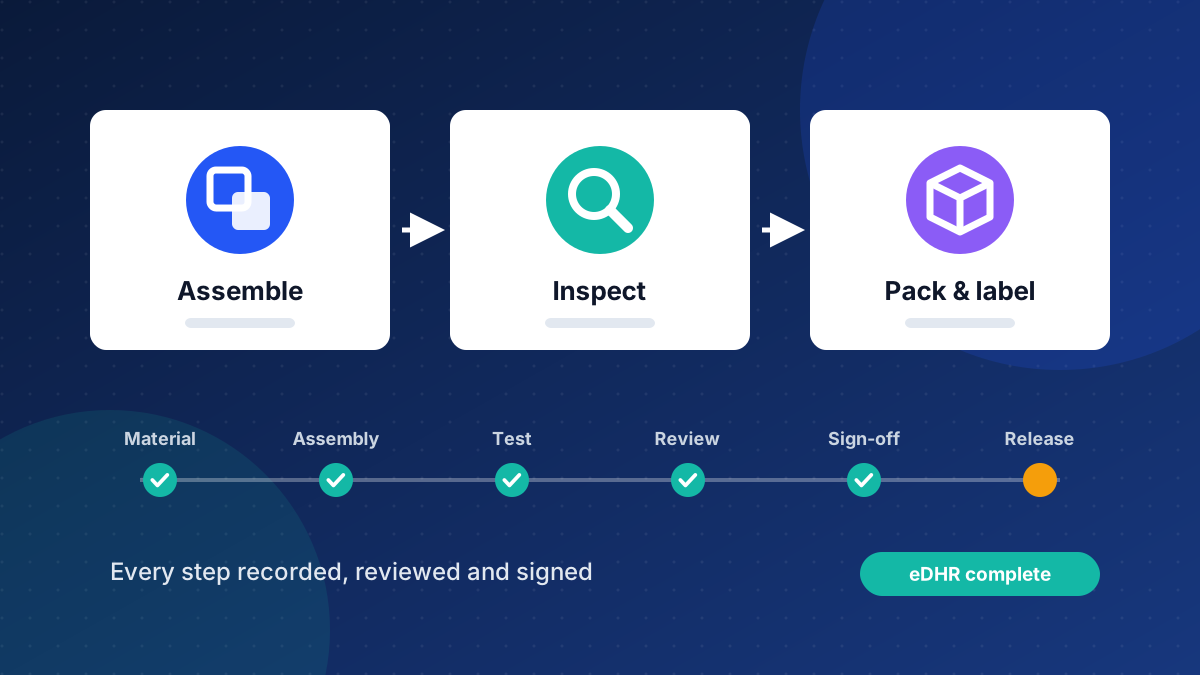
Every medical device manufacturer must be able to prove how each device or batch was built: which materials, which equipment, which people, which inspections and which results. For decades that proof lived on paper travelers. An electronic device history record (eDHR) captures the same evidence digitally, as the product is being made, and turns compliance into a by-product of normal production.
What is a device history record (DHR)?
A device history record is the compilation of records that shows a specific device, lot or batch was manufactured according to its approved device master record. It typically includes:
- Dates of manufacture and quantities made and released
- Materials, components and lots used
- Operations performed, by whom, and on which equipment
- Inspection and test results, including acceptance records
- Labels and the unique device identifier (UDI)
- Nonconformances, deviations and rework
An eDHR holds all of this electronically, linked together, and searchable in seconds.
The regulatory picture
- FDA QMSR. On February 2, 2026, the FDA's Quality Management System Regulation (21 CFR Part 820) took effect, incorporating ISO 13485:2016 by reference. The expectation to keep a production record for each device or batch, with traceability, remains.
- ISO 13485:2016. Requires a record for each medical device or batch that provides traceability and identifies the amount manufactured and approved for distribution.
- 21 CFR Part 11. Sets the rules for electronic records and electronic signatures in FDA-regulated work: audit trails, access control, and signatures linked to their records.
- EU MDR and UDI. Traceability and unique device identification requirements make reliable, connected production data even more important.
Always confirm the requirements for your products and markets with your regulatory and quality teams.
The problem with paper DHRs
- Missing entries, illegible handwriting and unsigned steps found only at final review
- Days spent reviewing records before a lot can be released
- Manual transcription of test results and equipment readings
- Slow, painful searches during audits, complaints and recalls
- Storage and retrieval costs for years of paper
What a good eDHR system does
- Enforces the process. Operators can only perform the next valid step in the approved route, with the current work instructions in front of them.
- Error-proofs the line. Material, equipment calibration and operator training are checked automatically before a step can start.
- Captures data at the source. Test equipment and machines send results directly, with no transcription.
- Applies electronic signatures that meet Part 11 expectations, with a complete audit trail.
- Handles nonconformance in the flow. Out-of-spec results trigger holds and NCRs instead of being discovered later.
- Enables review by exception. Quality reviews only the deviations, not every page, so release is faster.
- Provides full genealogy, forward and backward, for fast complaint investigation and recall scoping.
How an MES delivers eDHR
A manufacturing execution system is the natural home for the eDHR, because it already directs and records production. Siemens Opcenter Execution Medical Device and Diagnostics (formerly Camstar Medical Device Suite) was built for this purpose, combining paperless manufacturing, error-proofing and eDHR in one platform. Integrated with ERP for orders and materials and with PLM for the device master record, it closes the loop between design, production and quality.
Implementation roadmap
- Start with a pilot line. Pick a product family with stable processes and clear pain points.
- Digitize the device master record. Model routes, specifications, work instructions and data collection.
- Connect equipment and systems. Integrate test stations, label printers, ERP and PLM.
- Validate. Use a risk-based approach so effort goes where product quality is at stake.
- Train and go live, then run paper and electronic records in parallel only as long as your quality system requires.
- Scale to more lines and sites using a standardized template.
How to measure success
Track a baseline before go-live and compare afterwards: record review time per lot, documentation errors found at review, right-first-time rate, lot release cycle time, and the time needed to answer an audit or complaint traceability question.
Frequently asked questions
Is an eDHR required by the FDA?
The FDA requires the production record, not a specific format. Paper is still allowed, but electronic records make it far easier to keep them complete, consistent and retrievable.
What is the difference between DMR, DHR and DHF?
The device master record (DMR) defines how to build the device; the device history record (DHR) proves how each unit or batch was actually built; the design history file (DHF) documents how the design was developed.
Can we implement eDHR on an existing Camstar system?
Yes. Many plants extend an existing Camstar or Opcenter deployment, and an upgrade is often a good moment to move remaining paper steps into the eDHR. See our Camstar to Opcenter upgrade guide.
Ready to replace paper travelers? Conseptis implements Opcenter Medical Device and Diagnostics and eDHR for medical device and diagnostics manufacturers.